Verified-angle construction map
Approved-view Bantu knot construction map
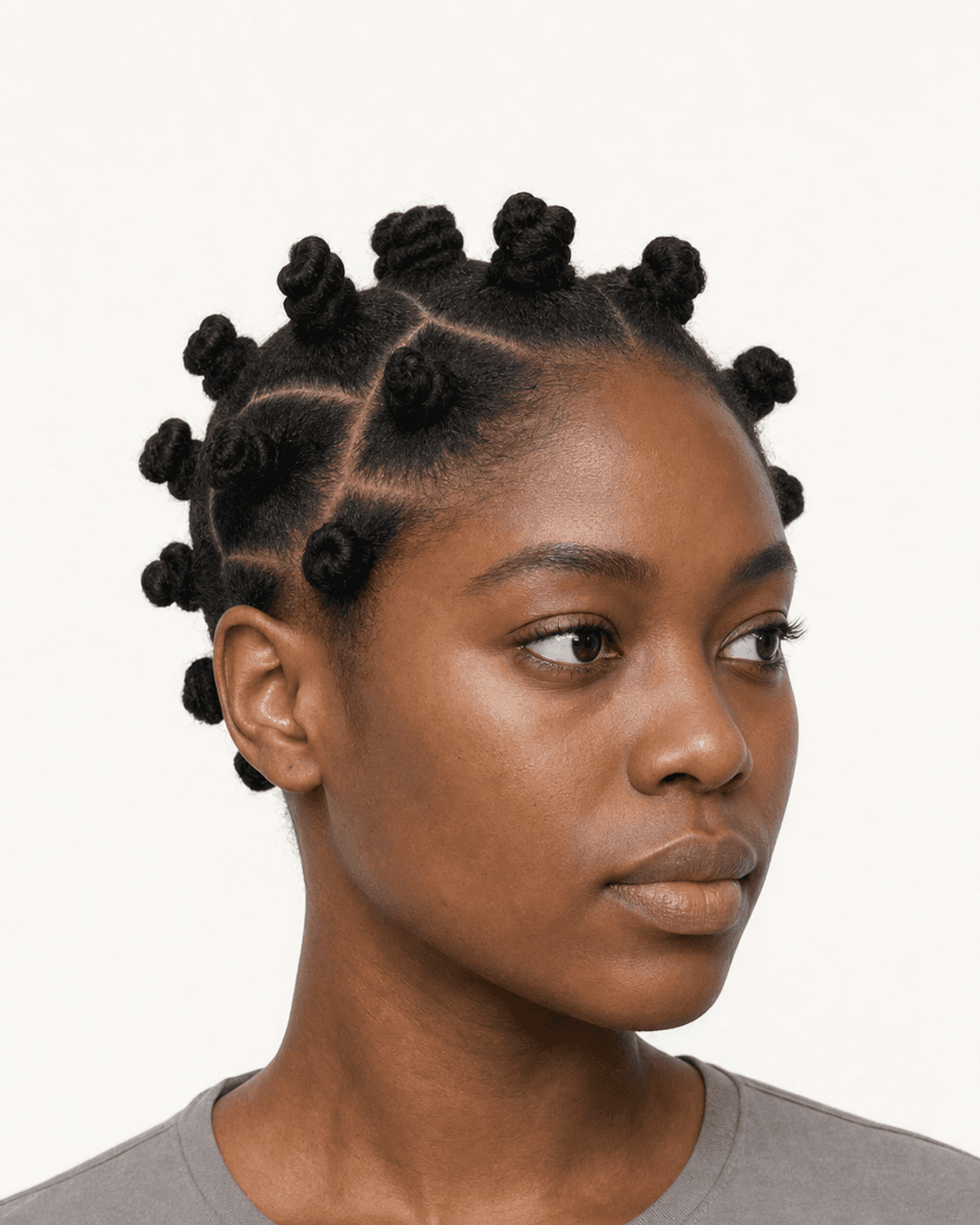
The approved front, side, and rear registry views are annotated only where the natural front hairline, balanced front knot scale, visible geometric section map, compact coiled knots, crown-to-nape distribution, and natural low nape edge are visible. The diagram does not fix knot count, hidden section geometry, twist direction, root method, tension, added-hair use, product formula, or wear duration.
3 publication views · 6 callouts

Natural front edge and balanced knot scale
The front view establishes a natural hairline, clean front sections, medium compact knots, and broadly balanced left-to-right placement.
- 01
Natural front hairline
The front edge remains visible and softly natural without an added accessory, carved design, or elaborate laid-edge pattern
- 02
Balanced front knot scale
The visible front and top knots remain medium and compact with normal positional variation rather than one guaranteed fixed count
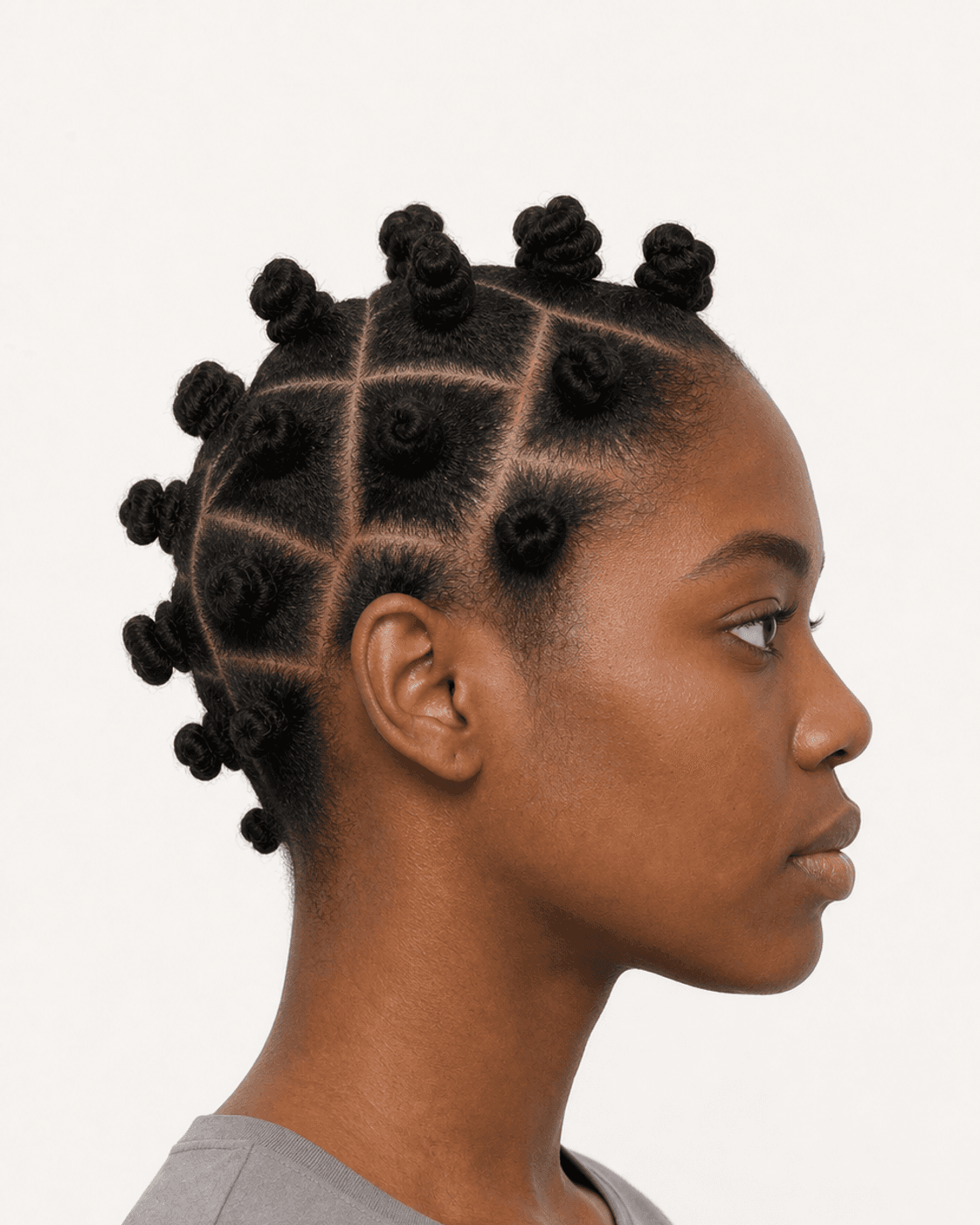
Visible section map and compact coils
The profile exposes skull-following square and softly triangular sections with compact coiled knots from the temple through the side and rear.
- 01
Visible geometric section map
Clean visible part lines form square and softly triangular sections that follow the curved head rather than a flat universal grid
- 02
Compact coiled knots
Each visible section resolves into a compact wrapped coil without ornament; exact twist direction and root anchoring are not proven
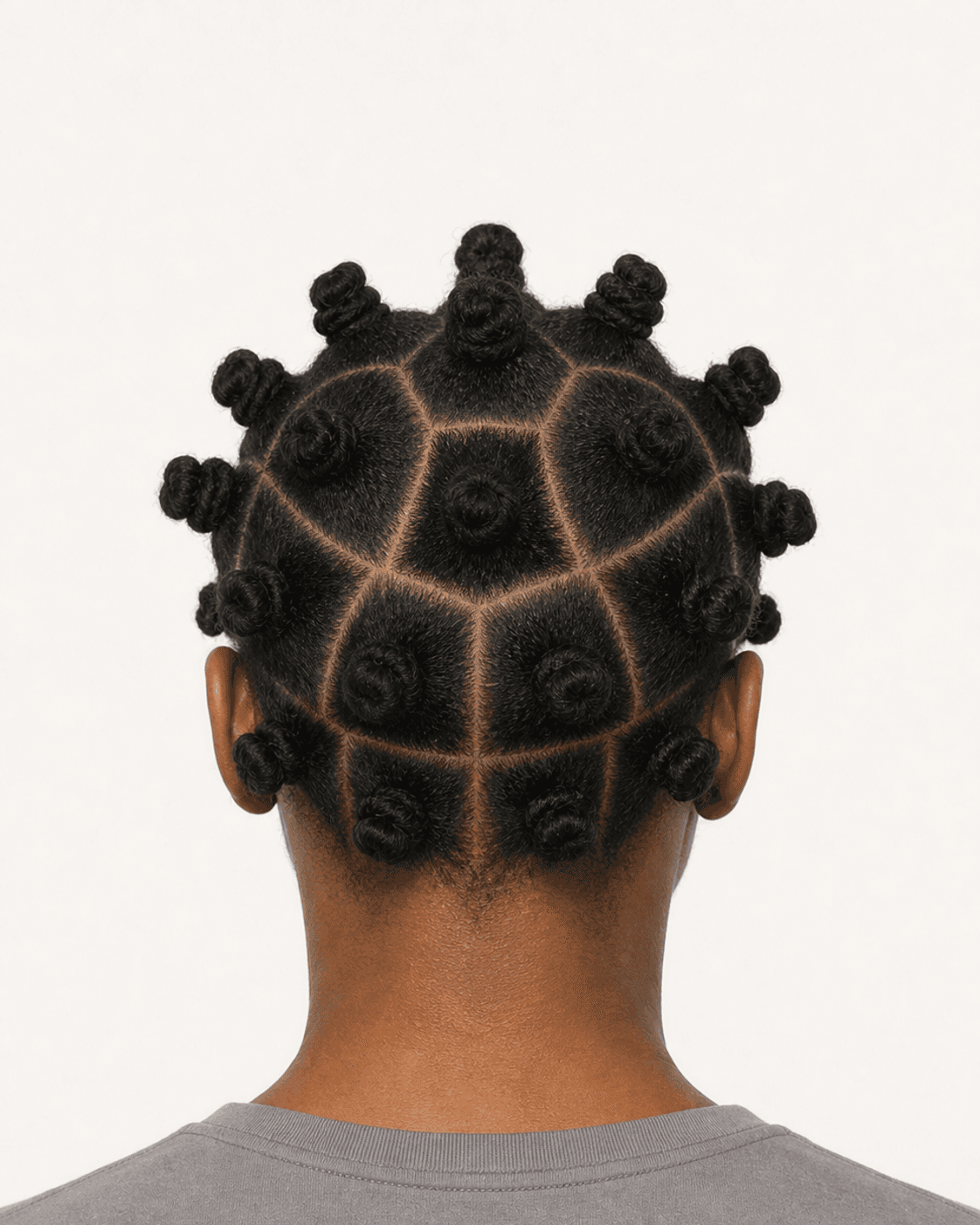
Full distribution and natural nape edge
The rear view confirms balanced crown-to-nape coverage, visible section clarity, medium knot scale, and a softly natural low edge.
- 01
Crown-to-nape distribution
Medium compact knots continue across the crown, occipital area, rear sides, and lowest visible sections with broadly balanced coverage
- 02
Natural low nape edge
The lowest nape remains softly natural beneath the final sections without a blocked line, extension tail, or decorative finish
Pins locate the reference evidence; the numbered notes make the request legible in the chair. This is an original Hairqut communication diagram, not a universal service prescription.
Provenance: The diagram uses the locked approved publication views, which mirror the formal evidence package byte-for-byte. Its HTML and SVG overlays preserve those pixels and keep every label responsive and accessible. A newer generated raster passed all six exact labels and the cultural-provenance boundary but remains internal because its raster output cannot prove approved-pixel preservation and critical labels would not remain semantic.