Haircut · Long layered cut
Long Layered Cut with Curtain Fringe
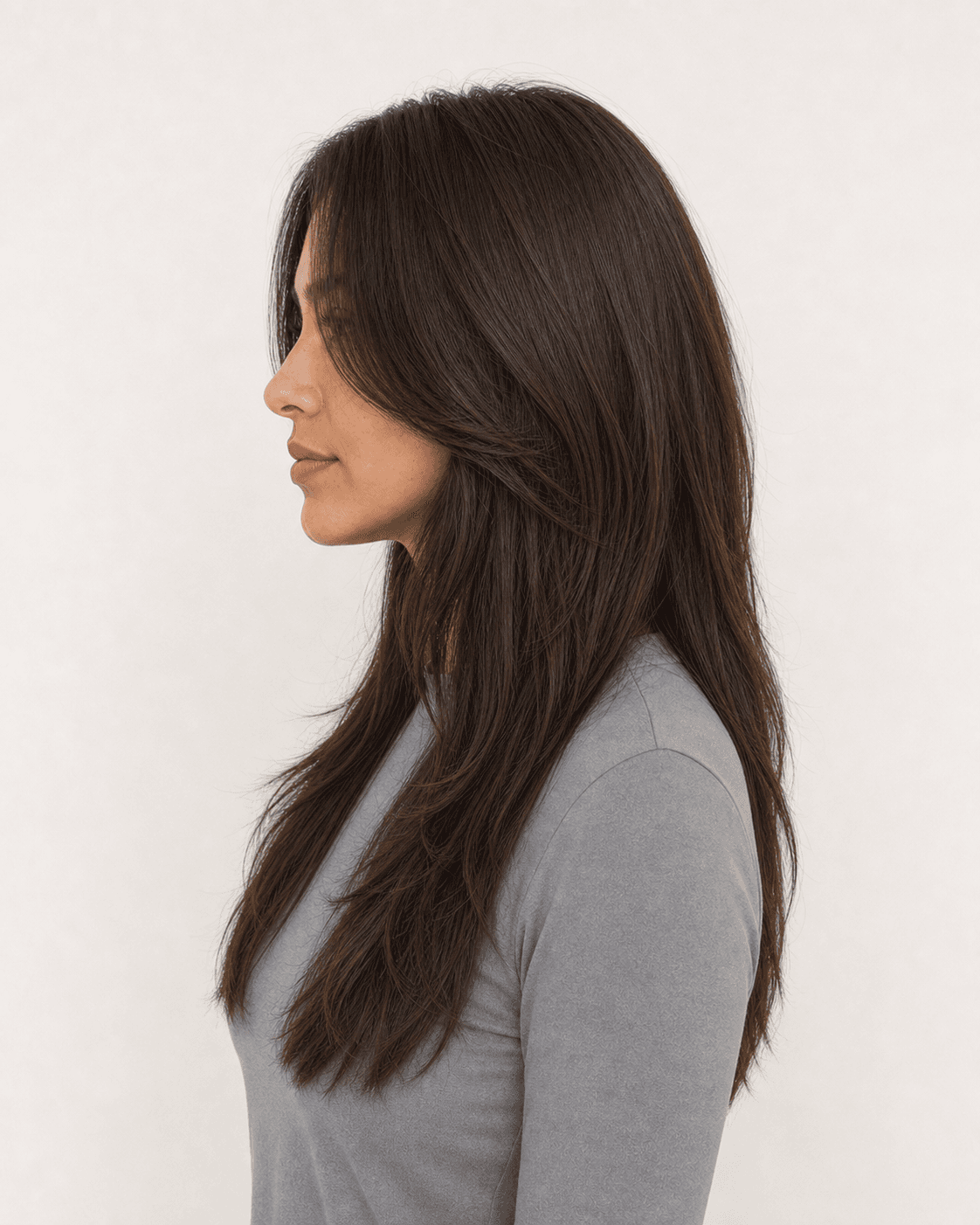
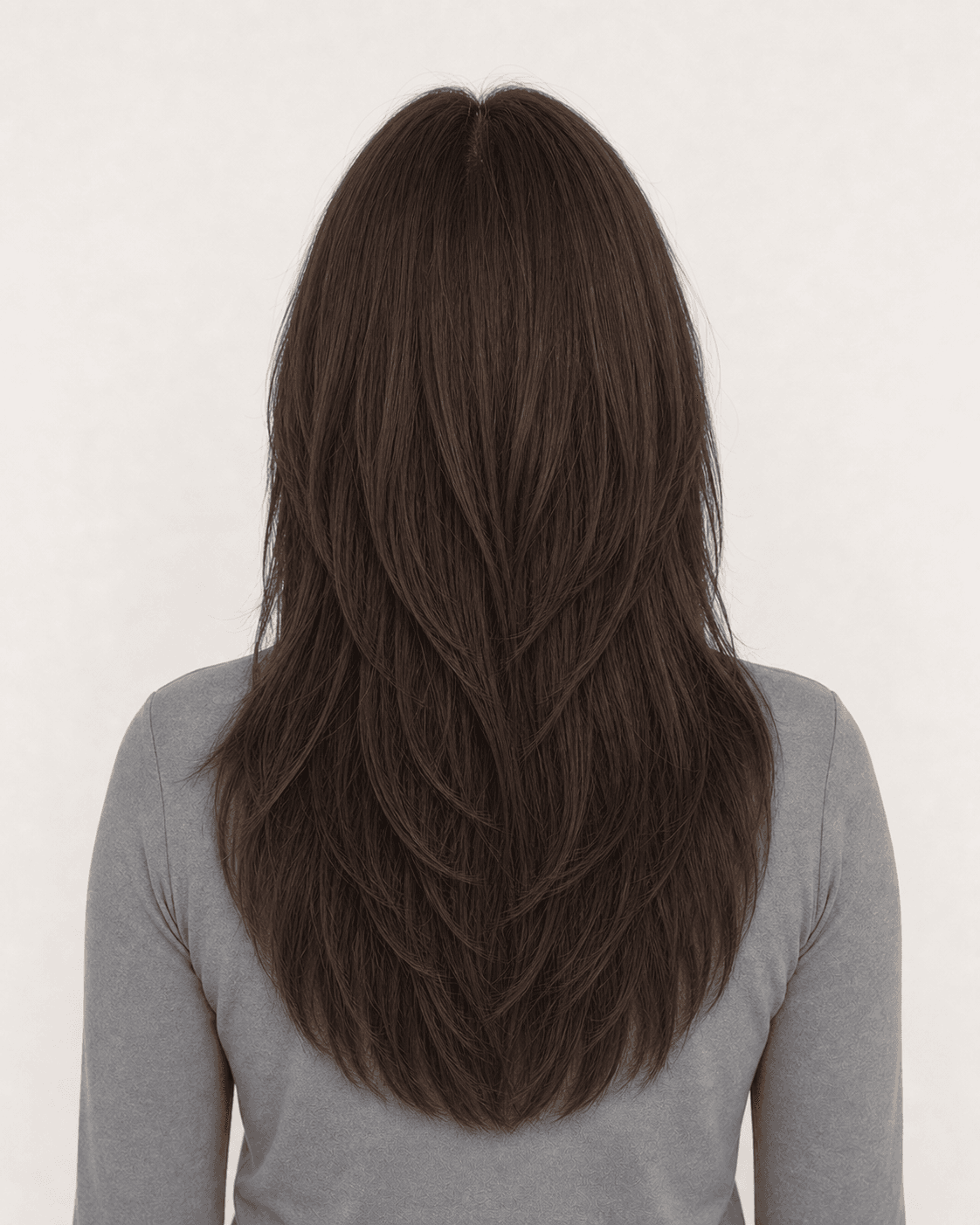
A mid-chest layered cut with a center-parted curtain fringe, cheekbone-to-jaw face framing, long internal movement, and a softly shaped perimeter.
Available as a mobile service at homes, offices, and hotels across Greater Montréal.

Three-quarter
20°
Drag to inspect the registered construction
Reference angle explorer
Drag or swipe · horizontal scroll or Shift + wheel · arrow keys
2 / 4
Fashion white · target #F2F0EA
Current documented coverage: four verified angles from 0° to 180°. A continuous 360° turntable publishes only after 24–36 consistent frames pass registry QA.
Showing three-quarter view at 20°.
Required registry views
One cut. Four viewpoints.
A single portrait can hide the taper, fade height, crown, weight line, or neckline. Every published Hairqut record must show the construction from the front, three-quarter, side, and rear. The recorded fashion white backdrop keeps the silhouette readable while preserving fine strand detail.

Canonical reference data
The source record behind the Blueprint.
These are the canonical attributes of the illustrated record. The Blueprint above translates them for a consultation; this section keeps the technical source explicit.
- Finished length
- Mid-chest
- Reference texture
- 2A, medium density
- Fringe
- Cheekbone-to-jaw curtain
- Perimeter
- Soft U-shape
Cut construction
- Parting
- A clean center part establishes the curtain opening and balanced front shape.
- Fringe
- Curtain pieces begin near the cheekbones and open away from the center.
- Face frame
- Progressive pieces move from cheekbone to jaw and blend into the long sides.
- Internal layers
- Long, blended layers create movement without removing the dense lower perimeter.
- Perimeter
- Mid-chest length with a softly shaped U rather than a hard V or blunt line.
- Reference colour
- Deep chestnut brown; colour is not a defining feature of the cut.
Professional brief
What to ask for
- 1
Preserve a mid-chest perimeter and establish a soft U-shaped baseline.
- 2
Create a center-parted curtain fringe beginning around the cheekbones and extending toward the jaw.
- 3
Connect the fringe into progressive face-framing pieces without creating a disconnected shelf.
- 4
Add long internal layers for movement while protecting density through the lower third.
- 5
Finish with restrained natural bends so the cutting lines remain visible.
Bring the four-view record to your consultation. Your professional should confirm what is achievable from your current length, density, texture, growth pattern, and hair condition before beginning.
Wear and maintenance
Living with the cut.
Maintenance depends on growth rate and how precisely you want the silhouette and perimeter to remain. These intervals are practical starting points, not fixed rules.
Find a professional for this style- Daily styling
- Direct the curtain fringe away from the center and use light heat or air-drying to preserve natural movement.
- Fringe refresh
- Typically every 4–6 weeks if the cheekbone opening is important to the shape.
- Full reshape
- Typically every 8–12 weeks to maintain the perimeter and connection between layers.
- Adaptation
- Layer spacing should be adjusted for density, shrinkage, curl pattern, and the amount of perimeter weight desired.
Quality assessment
Visible, not implied.
Publication threshold: 85. Assessed .
Why this record passed with warnings
- The rear perimeter reads more V-shaped than the softer U-shaped front reference, while remaining within the same long-layered family.
- Studio exposure varies modestly across viewpoints; hair edges and cutting lines remain legible in every image.
- AI-derived viewpoints are internally consistent illustrations, not proof that one physical 3D subject was photographed from four angles.
Registry provenance
100% AI-generated from scratch.
The four images are an intentionally matched fictional reference set made specifically for this Hairqut record. Fictional person; no real person or celebrity was used as a reference. The set passed deterministic asset checks and a separate visual consistency assessment.