
Verified-angle construction map
Approved-view shoulder-length loc map
The approved front, side, and rear registry views are annotated only where the center-to-soft-middle part, shoulder-length fall, medium loc diameter, natural gravity, organic root map, and softly varied perimeter are visible. The diagram does not invent an exact loc count, hidden grid, retwist method, rotation direction, tension level, or reconstruction plan.
3 publication views · 6 callouts

Part and balanced length
The front view establishes the center-to-soft-middle organization and a loose shoulder-length fall on both sides.
- 01
Center-to-soft-middle part
The visible part organizes the front without proving a rigid full-scalp grid
- 02
Shoulder-length fall
Individual locs finish around the shoulders with small natural length variations

Diameter and gravity
The profile records established medium-diameter locs falling freely from crown to shoulder without a fade or taper.
- 01
Medium loc diameter
The visible locs maintain a broadly consistent medium scale with natural surface texture
- 02
Natural gravity
The loose locs travel downward through the side rather than being tied, swept, or sculpted
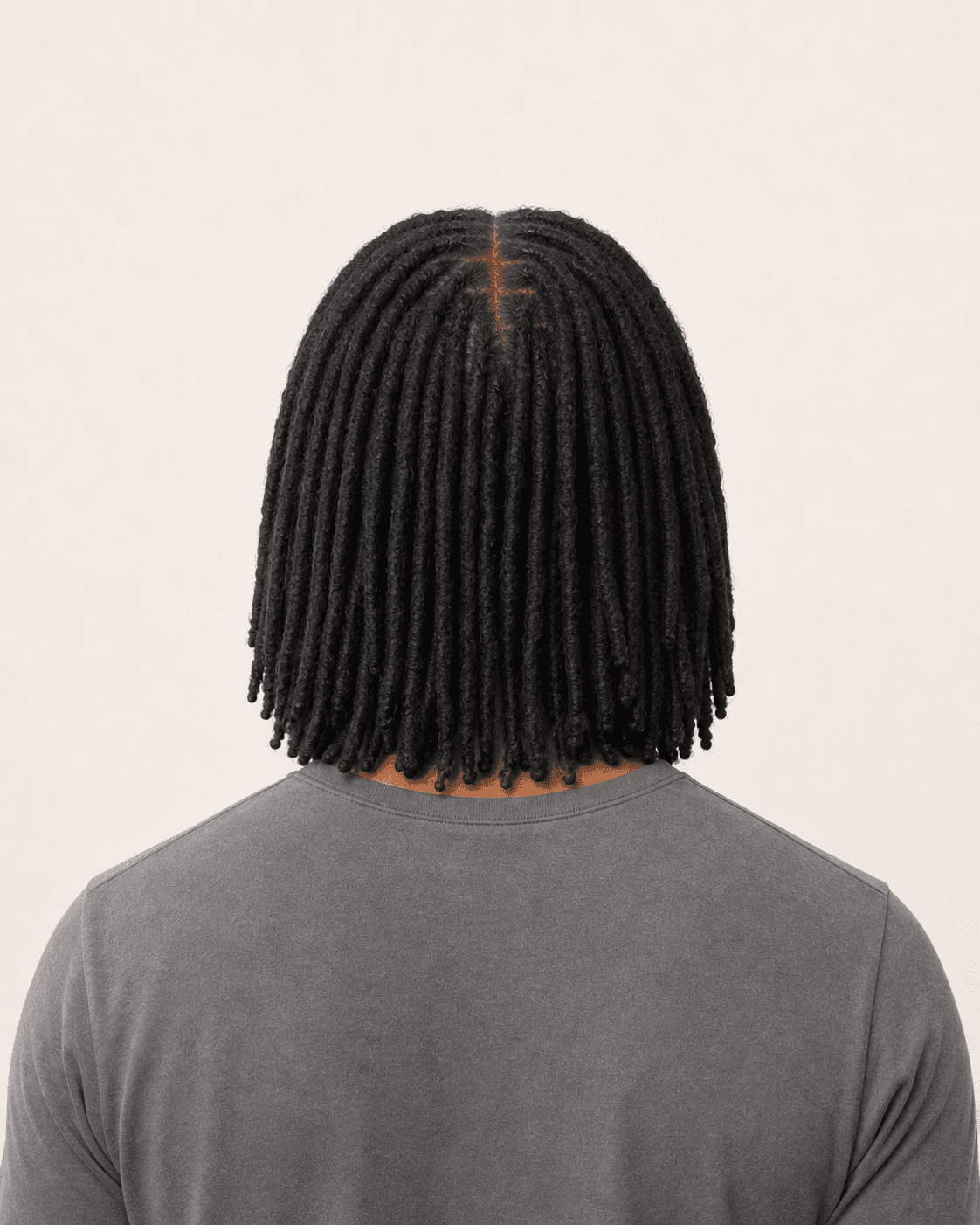
Root map and perimeter
The rear view documents organic visible sections, distributed density, and a softly varied shoulder outline.
- 01
Organic visible root map
The exposed crown shows clean but non-uniform sections; hidden section boundaries remain unknown
- 02
Naturally varied perimeter
The rear ends form a soft shoulder outline rather than a rigid blunt line
Pins locate the reference evidence; the numbered notes make the request legible in the chair. This is an original Hairqut communication diagram, not a universal service prescription.
Provenance: The diagram uses the locked approved publication views, which mirror the formal evidence package byte-for-byte. Its HTML and SVG overlays preserve the approved pixels and keep every label responsive and accessible; no new generated diagram was justified for this record.